
Texas Criminal History Records
Texas criminal history records come from multiple sources across the state. The Texas Department of Public Safety manages the central statewide database, but county courts, sheriff offices, and local law enforcement agencies each maintain their own records as well. If you need to search for arrest records, court case data, or conviction information in Texas, this page covers where to look and how to get what you need. You can start with an online search or go directly to a county court or agency in person. Texas has 254 counties, and most now provide some form of online access to criminal history and court records.
Texas Criminal History Records Overview
Texas DPS Crime Records Division
The Texas Department of Public Safety (DPS) Crime Records Division is the main agency that keeps criminal history records at the state level. It acts as the State Control Terminal for eight state and national criminal justice programs. The division collects data from local law enforcement agencies all over Texas, compiles it into statewide databases, and sends the data to national databases at the FBI. This system is called the Texas Computerized Criminal History (CCH) system. It is the most complete source of criminal history data in the state.
The Crime Records Division has three main units. Crime Records Services handles the collection and upkeep of criminal history data. The Criminal Justice Information Service (CJIS) Security Office audits local agencies to make sure they meet FBI security rules. The Texas Law Enforcement Support Office (LESO) helps agencies get equipment from the U.S. Department of Defense. All three work together to keep the state's criminal information systems available around the clock to authorized users. You can visit the DPS Crime Records Division page to learn about available services and how to request records.
DPS is also the clearinghouse for all non-criminal justice fingerprints in Texas. This means DPS processes fingerprint-based criminal history checks submitted for professional licensing, certification, and other legally authorized purposes. Over 13,000 qualifying law enforcement agencies operate under the statewide framework that DPS maintains and supports.
The Texas Government Code Chapter 411 gives DPS its legal authority to collect, maintain, and share criminal history record information. It defines what counts as criminal history, including arrest records, conviction data, and corrections information. The statute also establishes the sex offender registration program that DPS operates statewide and sets penalties for unauthorized access to or misuse of criminal history data.
The Texas Constitution and Statutes database provides direct access to the law that governs the DPS Crime Records Service and its authority over the statewide criminal history system.
Government Code Chapter 411 also outlines the process for challenging and correcting inaccurate criminal history record information, which is important for individuals who find errors in their own records.
How to Search Texas Criminal History Records
There are several ways to search for criminal history records in Texas. The right method depends on what type of record you need and how detailed the information has to be.
For court case records, the Texas Judicial Branch website is the right place to start. The site links to the re:SearchTX system at re.search.txcourts.gov, which is a free statewide portal for looking up court records. You can search by name, cause number, or case type. The system shows party names, case status, hearing dates, and docket entries for participating courts. Many Texas courts send their data to this system, though not every county participates yet. For non-participating counties, you need to contact the local clerk's office directly.
The Texas Judicial Branch homepage provides resources for finding court records at every level of the Texas court system, from municipal courts handling Class C misdemeanors up to appellate courts and the Court of Criminal Appeals.

For the full case file or certified copies of court documents, you need to go to the clerk's office in the county where the case was filed. Staff can pull up cases by name or cause number and make copies for a fee.
For DPS-level criminal history and fingerprint-based checks, access is controlled by statute and varies by who is requesting the information and why. The Texas DPS website explains the different types of requests available to the public, including how to request your own criminal history record.
Types of Texas Criminal History Records
Texas criminal history records cover a wide range of document types. Each is created at a different point in the criminal justice process and kept by a different agency. Knowing which type you need will help you figure out where to look.
Arrest records come from law enforcement when someone is taken into custody. The arresting agency collects fingerprints, takes a booking photo, and files an incident report. That data goes into the local agency's records and gets reported to DPS for the statewide CCH database. County sheriff offices and city police departments hold these records locally. Booking information for county jails is often available through an online inmate search on the jail's website.
Court case records document everything that happens after charges are filed. The District Clerk keeps felony case files. The County Clerk handles misdemeanor records. The file includes charging documents, motions, judgments, and sentencing orders. Most court records are public. Some records may be sealed if a judge orders it, but that is not common for standard criminal cases.
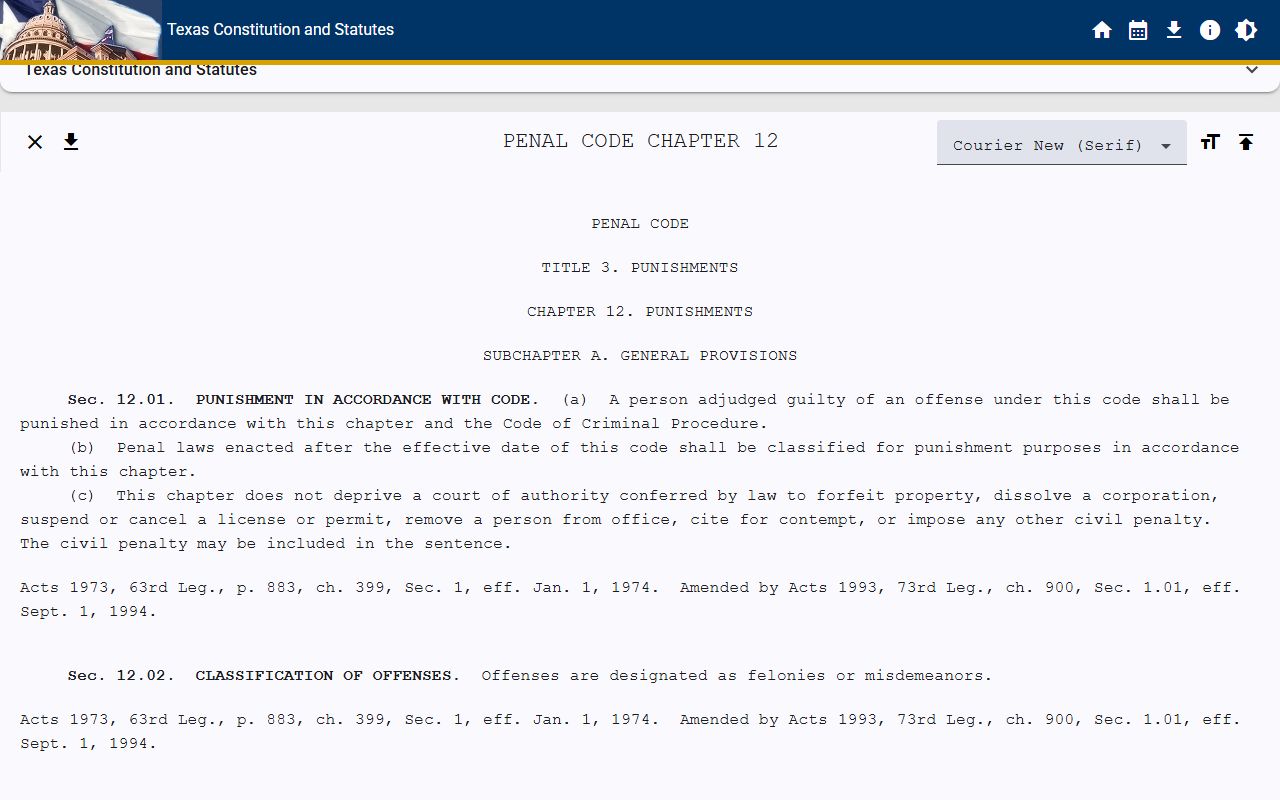
The Texas Penal Code Chapter 12 classifies criminal offenses and sets the punishment ranges for each category. That classification determines how offenses appear on criminal history records. The three main categories are felonies (first, second, and third degree, plus state jail felonies), misdemeanors (Class A, B, and C), and capital felonies.
The Texas Penal Code statutes page shows how crimes are classified under Texas law, which shapes the way criminal convictions are recorded and reported to the state database.
Felony records stay with the District Clerk. Misdemeanor records go to the County Clerk. This distinction matters when you are trying to locate a specific case file, because you need to contact the right office.
Texas Courts and Criminal Case Records
Texas has a layered court system, and criminal records exist at each level. The type of offense determines which court handles the case and which clerk keeps the records.
District Courts handle felony criminal cases. Every county in Texas has at least one District Court, and larger counties like Harris, Dallas, and Bexar have dozens. The District Clerk in each county is the official custodian of felony case files, including grand jury indictments, judgments, and sentencing orders. When you need copies of felony case records, the District Clerk is where you go. The Texas Code of Criminal Procedure Chapter 66 requires courts and law enforcement to report arrest and disposition data to DPS within set timeframes, which helps keep the statewide database accurate.
County Courts at Law handle Class A and Class B misdemeanor cases. The County Clerk maintains those records. Class C misdemeanors go to Justice of the Peace courts and municipal courts. Municipal courts often run their own records systems, and you may need to contact them directly for city-level case information.
The Texas Court of Criminal Appeals is the court of last resort for criminal matters in Texas. It reviews capital cases and serious criminal appeals. Records from this court are public and available through the Judicial Branch website. The court's decisions affect how criminal records are handled statewide.
The Texas Supreme Court and Court of Criminal Appeals maintain public records of all appellate proceedings, and their decisions establish the rules that govern criminal records across all Texas courts.
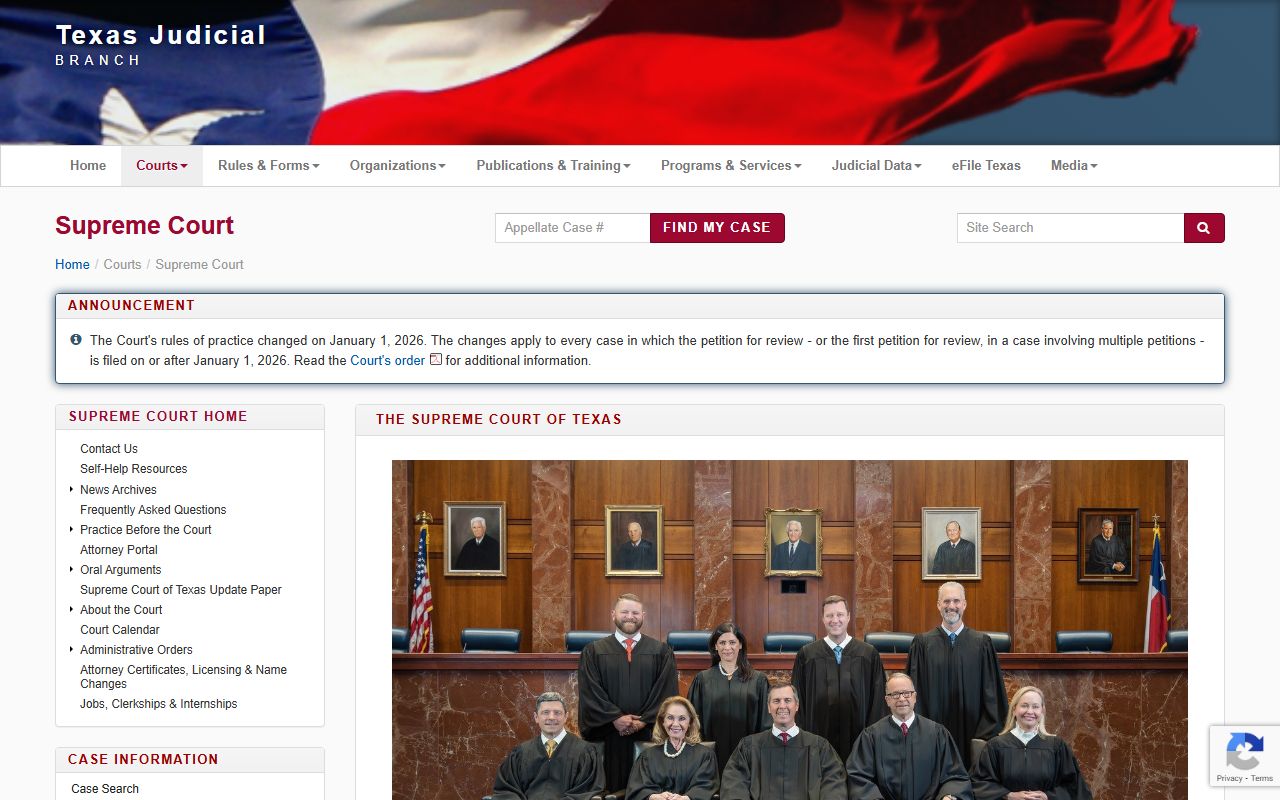
The Texas Judicial Branch's Office of Court Administration publishes statistical reports on criminal case filings and dispositions statewide, which can be a useful reference when researching court activity in a particular county.
TDCJ Inmate and Offender Records
The Texas Department of Criminal Justice (TDCJ) operates the state prison system and maintains detailed records on incarcerated and supervised offenders. TDCJ houses approximately 127,000 offenders across state jails, prisons, and correctional facilities at multiple custody levels throughout Texas. The agency also oversees the Parole Division and the Community Justice Assistance Division, both of which generate records relevant to criminal history research.
TDCJ provides a free online inmate search at tdcj.texas.gov/offender_info. You can search by name, TDCJ number, or SID number. Results show the offender's current location, the offense they were convicted of, the county of conviction, and a projected release date. The data is public under Texas law. The search covers current inmates, parolees, and those under mandatory supervision. Historical execution data and death row information are in a separate section of the same website.
For county jail records covering pretrial detainees or people serving misdemeanor sentences, you need to contact the specific county jail directly. TDCJ covers only state-sentenced felons, not short-term county inmates.
The TDCJ inmate information system is updated regularly and is one of the most widely used public criminal history resources in Texas for locating offenders and confirming conviction details.

TDCJ also offers victim services that notify registered victims when an offender's custody status changes, which is handled separately from the public inmate search system.
Texas Public Records Law and Criminal History
Texas has strong open government laws that give the public broad access to criminal justice records. The main law is the Texas Public Information Act (Government Code Chapter 552). Under this law, government information is presumed public, with specific exceptions to protect privacy and active investigations.
Agencies must respond to public information requests within 10 business days. If an agency wants to withhold a record, it must seek a ruling from the Attorney General's office. Section 552.108 of the Government Code covers the law enforcement exception, which can shield records from disclosure when release would interfere with an active investigation or prosecution. Once a case closes, much more of the file becomes available to the public.
The Attorney General's Open Government Division interprets the Public Information Act and issues formal rulings on disclosure disputes. It also publishes guides for both citizens and government employees on how the law works and what records must be made available.
The Texas Attorney General Open Government Division page outlines the rights of the public to request criminal records and other government documents, along with how to appeal a denial or file a complaint.

If an agency denies a records request you believe is valid, you can file a complaint with the AG's Open Government Division. The office can compel disclosure if it finds the withholding improper.
Note: Certain criminal history information, including active investigation records and records involving juveniles, may have restricted access under Texas law regardless of the general public records rules.
Criminal History Records at the County Level
Most criminal history records in Texas originate and are kept at the county level. When an arrest happens, the county sheriff or local police file the report. When a case goes to court, the county clerk stores the file. When someone is booked into the county jail, the facility keeps the booking record. This means finding criminal history for a specific person often requires knowing which county is involved.
Each of Texas's 254 counties has a sheriff's office, a District Clerk, and a County Clerk. These three offices together hold most county-level criminal history data. The District Clerk is the custodian of felony case files. The County Clerk handles misdemeanor records. The sheriff's office maintains arrest records, incident reports, warrant information, and jail booking logs. All three report to DPS, which compiles the data into the statewide CCH database.
County jails also hold booking records for pretrial detainees and those serving shorter sentences. Most county jails have an online inmate search on their website, though the format and depth of information varies widely by county.
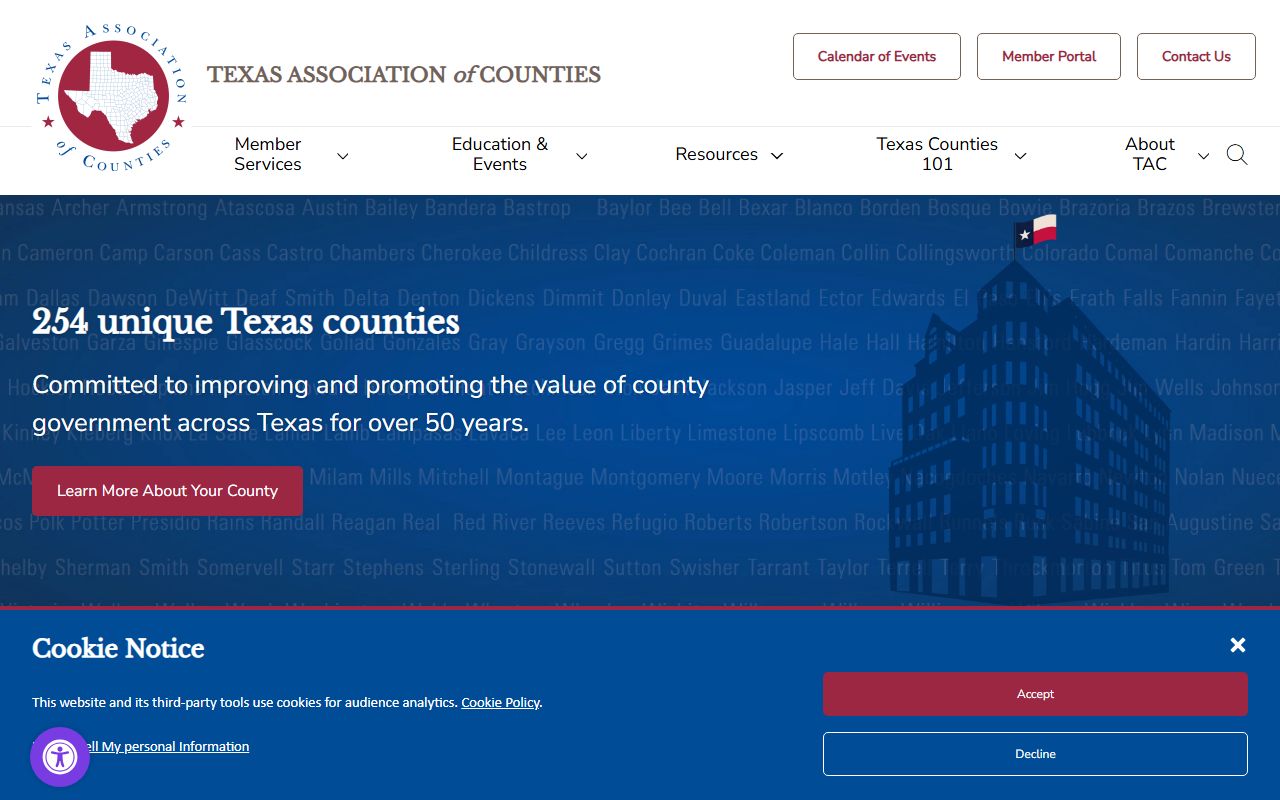
The Texas Association of Counties provides information on all 254 county governments, including directories for county officials and links to county websites. This is a useful starting point when you know which county you need but are not sure how to contact the right office.
The Texas Association of Counties page covers all county government operations statewide, making it a practical resource for finding the sheriff, district clerk, or county clerk in any of the 254 Texas counties.
For counties that participate in the statewide re:SearchTX system, you can search court records online at no cost. For counties that do not yet participate, a phone call or in-person visit to the clerk's office is needed.
Browse Texas Criminal History Records by County
Texas has 254 counties, each with its own courts, sheriff's office, and clerk offices that maintain criminal history records. Select a county below to find local court contact info, online search resources, and details on how to access criminal records in that area.
Criminal History Records in Major Texas Cities
Residents of major Texas cities go to the court in their county for criminal case records. Select a city below to find out which county court handles records for that area and where to go for local criminal history information.